Survey of drifting FAD strandings at Makemo and Marutea Nord
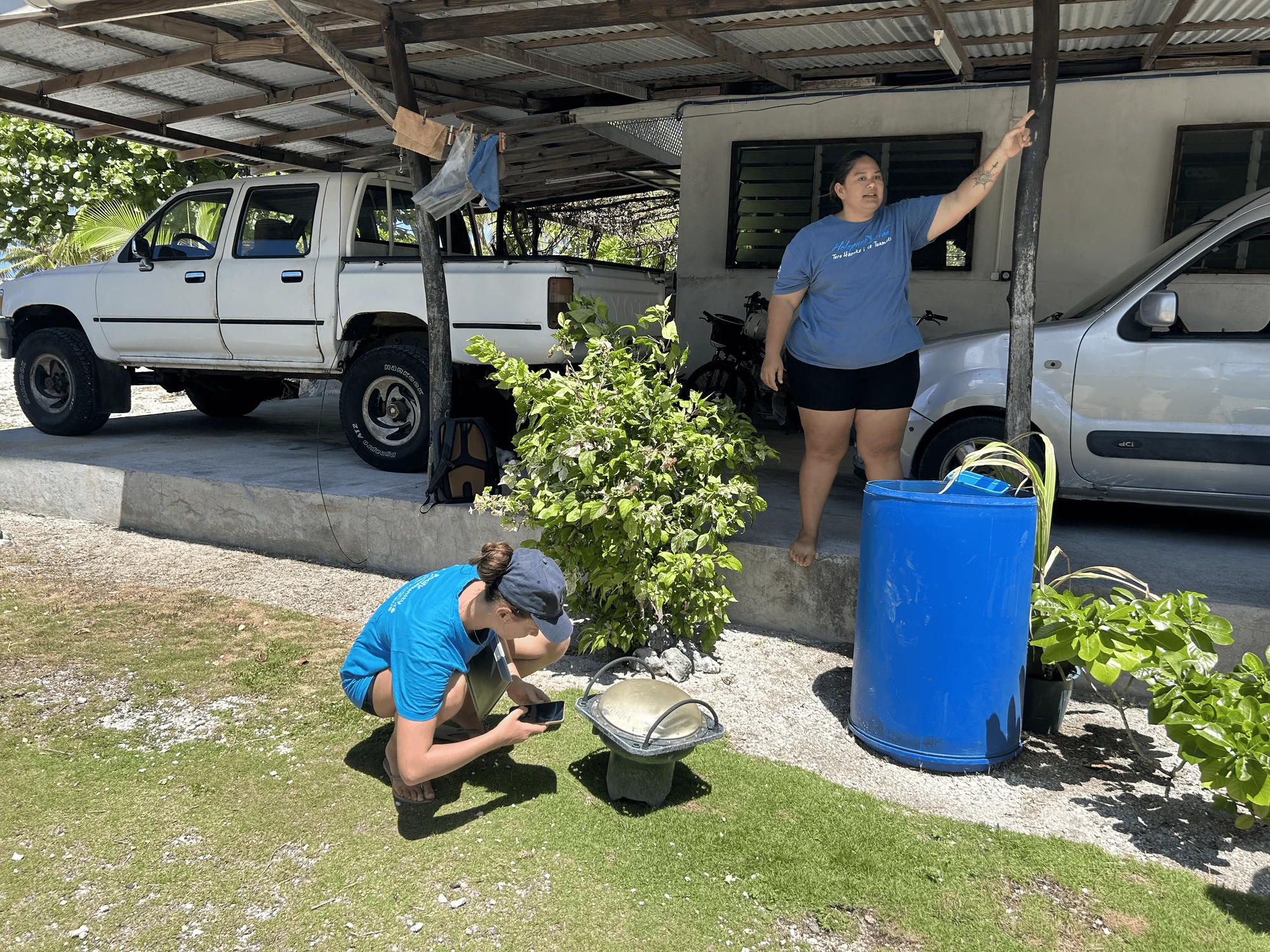
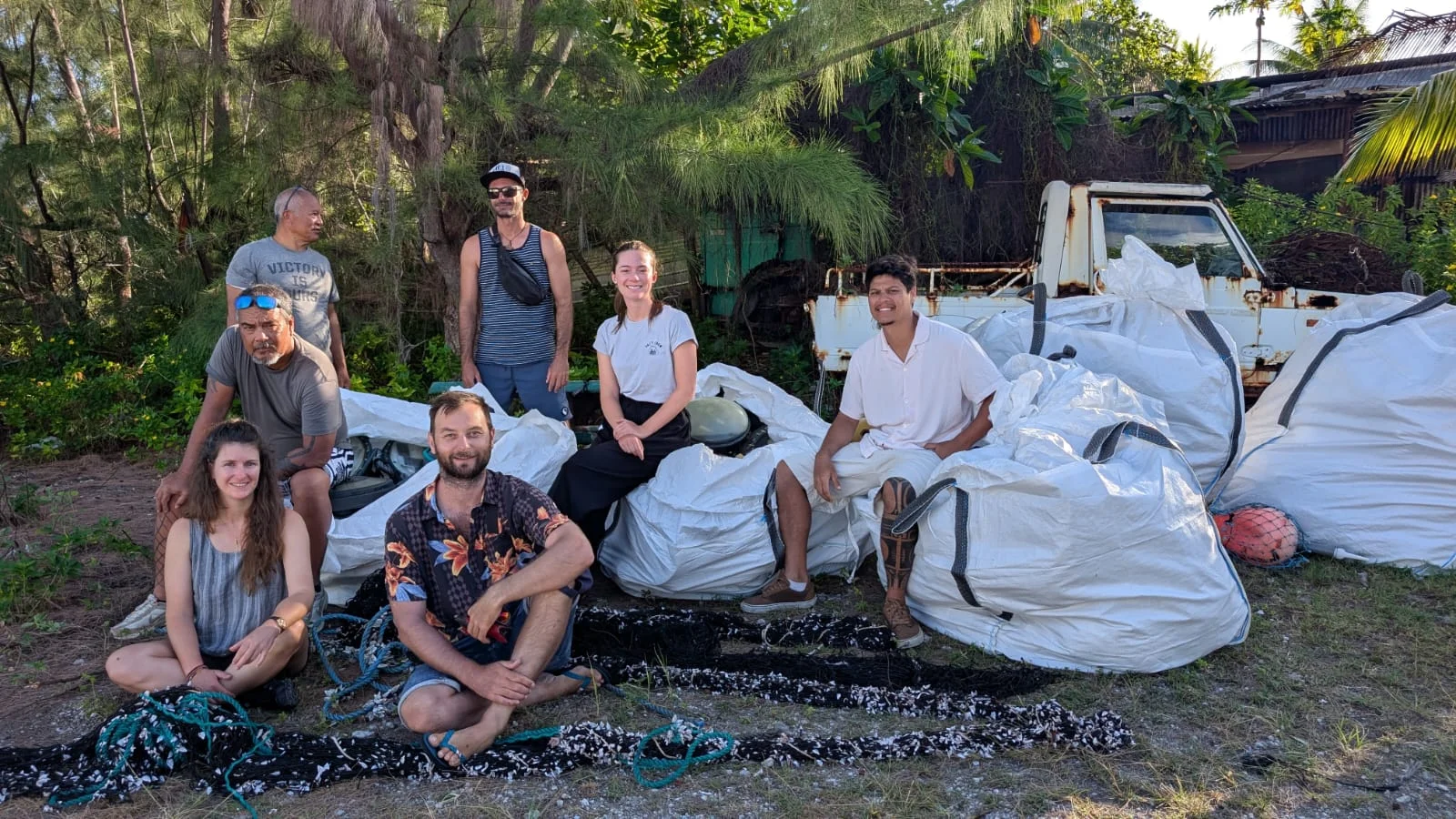
From 15 to 22 February 2026, French Polynesia's Marine Resources Directorate led a mission to survey stranded drifting fish aggregating devices (dFADs) at Makemo and Marutea Nord, in the Tuamotu archipelago. TAHITI FADWATCH took part alongside the Pacific Community and Tahitienne des Secteurs Publics.
In the Tuamotu archipelago, low-lying atolls lie across the prevailing currents. Their shorelines are long, many of their motu (islets) are uninhabited, and what the sea brings stays there. Drifting FADs end up snagging on them.
This geography, which favours strandings, had already warranted a first survey campaign in the Tuamotus, in 2022. Makemo was not part of it. The February 2026 mission follows on from it.
For TAHITI FADWATCH, invited by French Polynesia's Marine Resources Directorate (Direction des ressources marines, DRM), the mission came at the right time. The international dFAD workshop had been held in Tahiti the week before: the mission offered first-hand experience in the field, to see with our own eyes the impacts that had just been described there. It was also an opportunity to learn the procedures of the Pacific Community (SPC): its survey method and its recommendations at regional level, but also residents' perceptions and the operational reality on site.
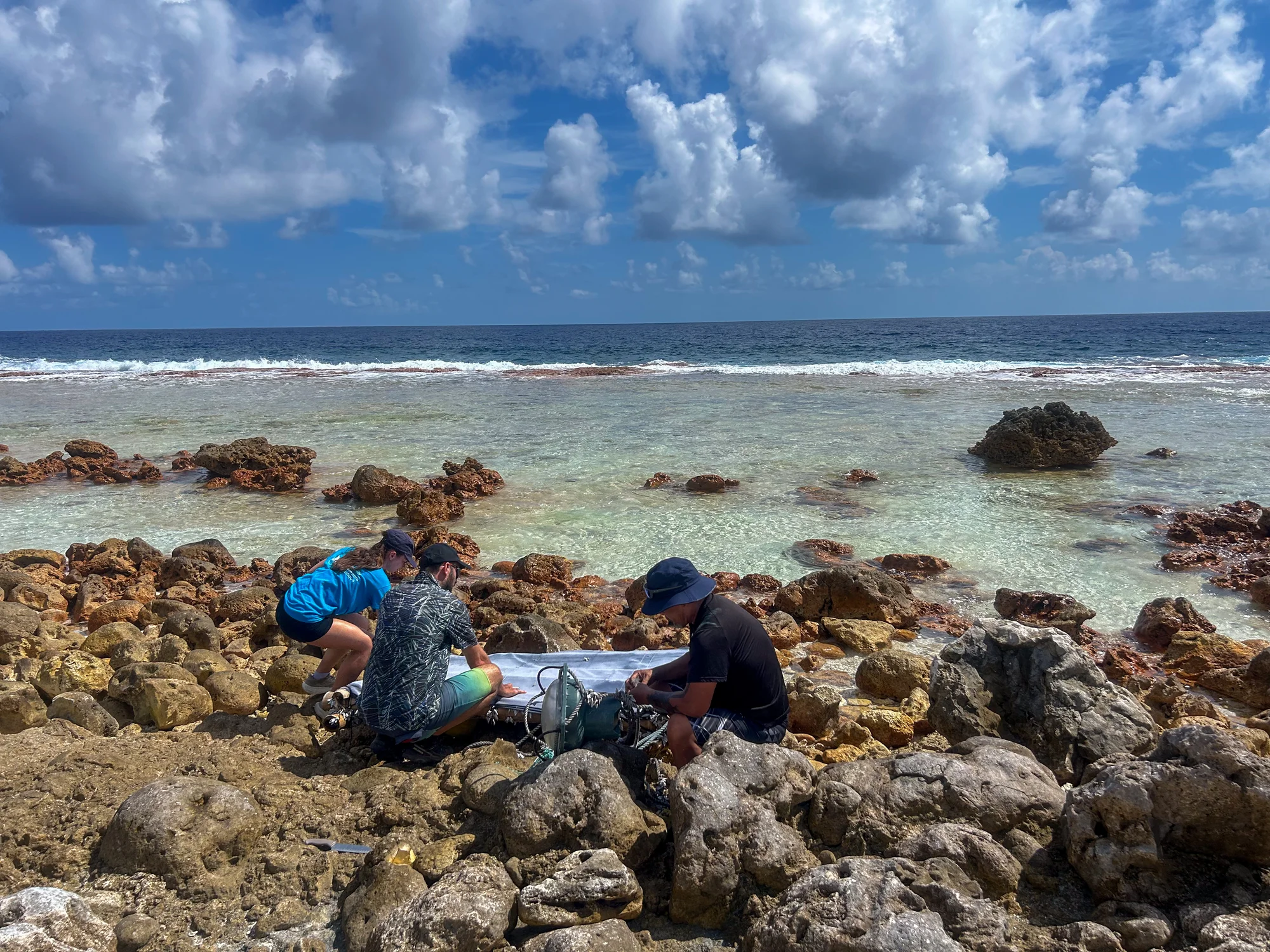
On site, we took part in the dFAD surveys, captured images and talked with residents.
The mission opened with a public meeting, followed by door-to-door visits. The shorelines, inhabited and uninhabited, were then surveyed on foot, by boat and by drone. Only the beacons were collected, to be shipped back later and processed in Tahiti through the waste electrical and electronic equipment stream.
Three findings emerge from this mission.
At sea, first. On the crossing between Makemo and Marutea Nord alone, three dFADs were encountered. Half-submerged, a dFAD adrift is a hazard for navigation between the islands, all the more so at night.
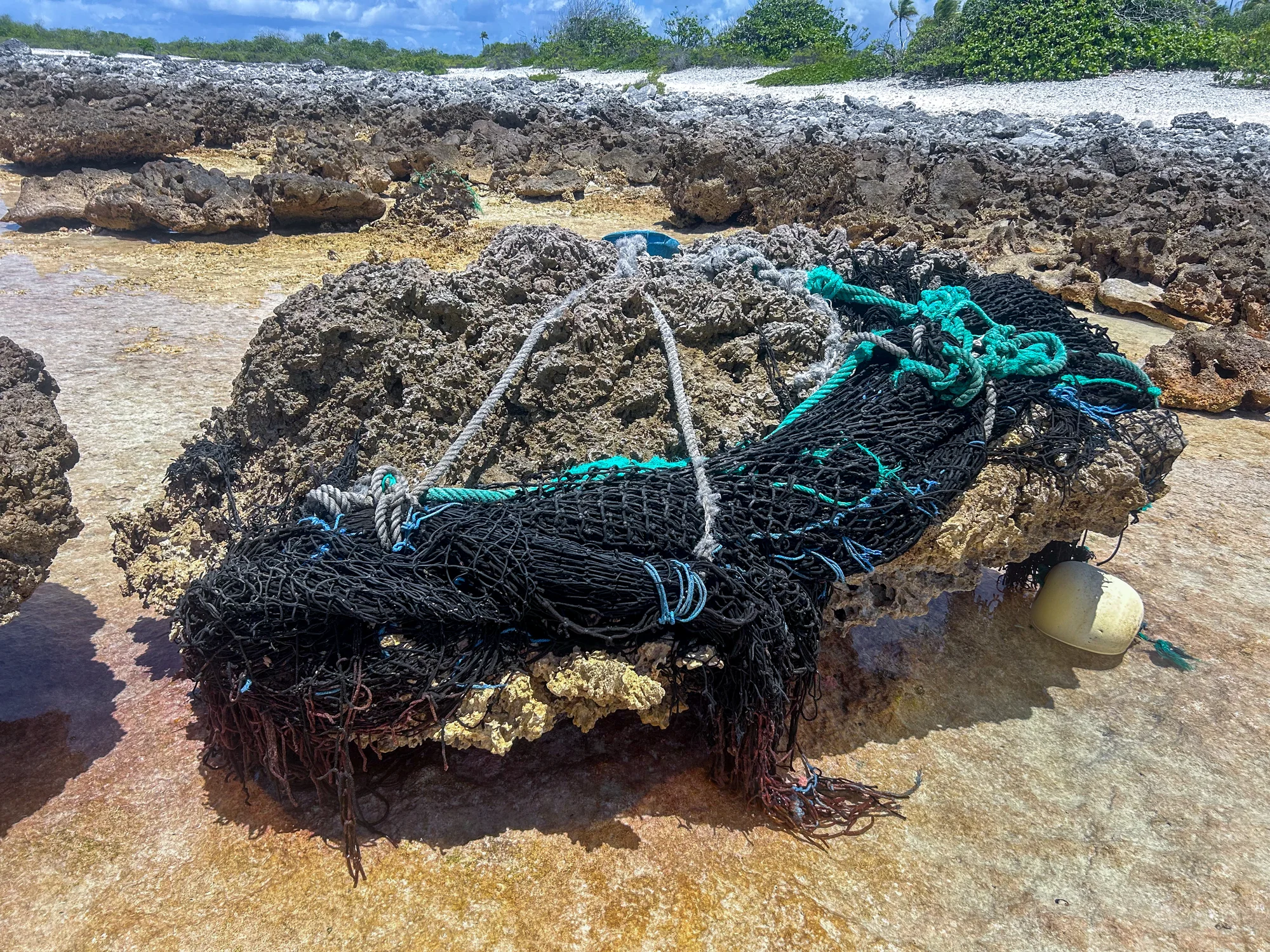
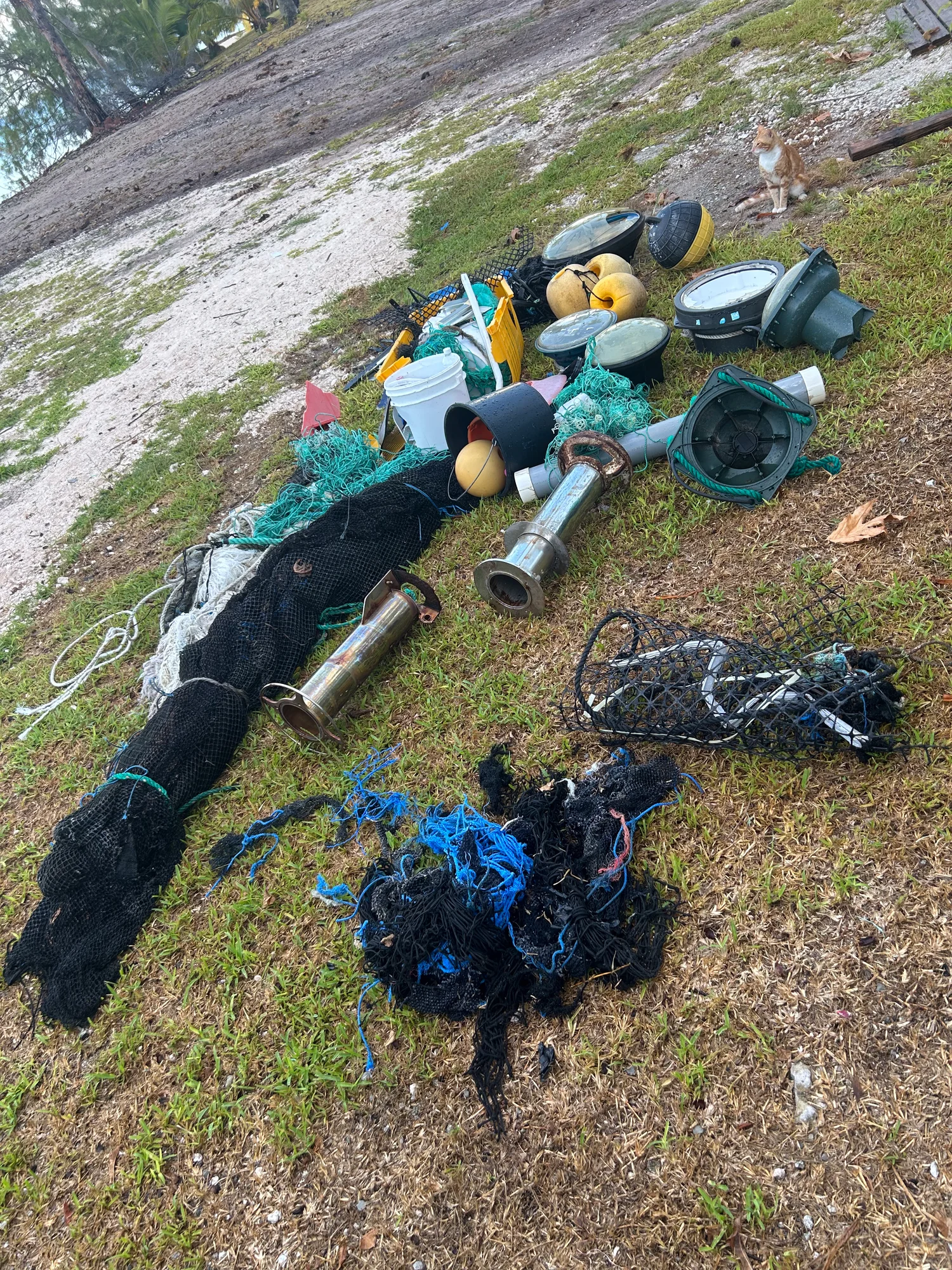
On the shoreline, next. At Marutea Nord, the aim was to survey an uninhabited island, already surveyed previously by the environment ambassadors of Tahitienne des Secteurs Publics (TSP). The survey showed that the work they had carried out there two years earlier had become almost invisible. On site, it was the corals that bore the mark of the strandings: a dFAD's raft scrapes the living coral of the reef flat, and its netting becomes entangled in it. Over time, floats and tarps break down into microplastics, and beacons leave batteries and electronic components on shorelines that have no processing stream.
Among residents, finally. They do not passively endure these strandings: they dismantle dFADs and reuse whatever can be reused. PVC, netting, bamboo, floats and solar panels are identified, sought after and reused according to the needs of the moment, to the point of becoming hammocks or solar chargers. This is a genuine local skill. It is also an avenue for recycling: what is reused on site does not have to be shipped back to Tahiti.
For the Paumotu (the people of the Tuamotus) we met, the phenomenon is no longer an event. The current generation has watched it grow since childhood, and the next was born with it.
What we take away from this mission fits in one sentence: the bottleneck is not the method. The survey method exists, and it is tried and tested at regional level. What is missing is the data. Today, every survey means sending a team from Tahiti, and a territory this scattered cannot be covered regularly in this way.
Yet the residents of the atolls are on the shoreline every day. They identify dFADs and know their components. What they observe is an asset for monitoring strandings over time, provided they are given a framework for passing it on.
This is also what gives concrete meaning to our ambition: to become the operational relay, in French Polynesia, of the regional drive to collect drifting FADs at sea, building on existing schemes and on those who live in the islands.
A dFAD sighted. A position given. A photograph. A stranding reported. If you come across a dFAD, at sea or on the shoreline, report it to the Marine Resources Directorate using the "Report a drifting FAD" button on this site. Every report can help to anticipate.
With the support of


Illustrations
1 / 5
Read next
Understanding
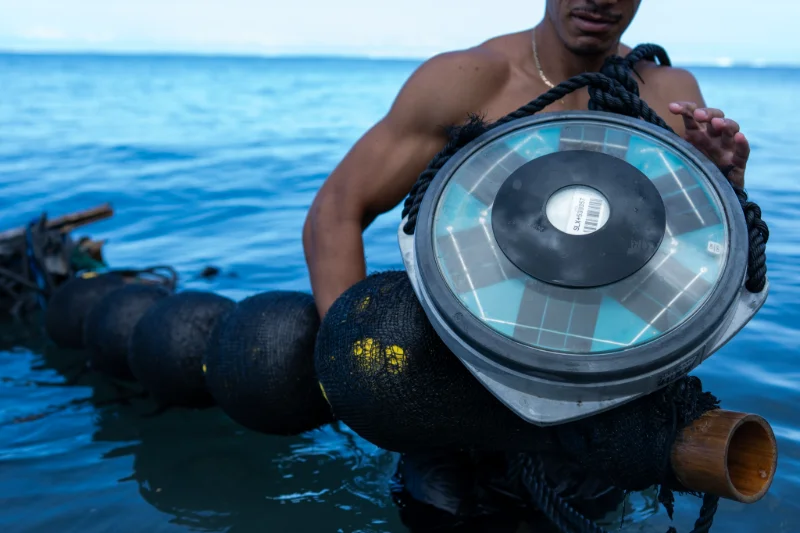
What is a drifting FAD?