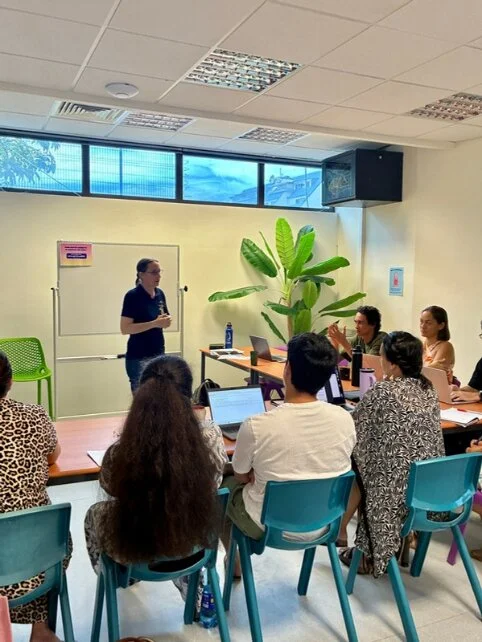
International dFAD workshop in Tahiti: what we take away
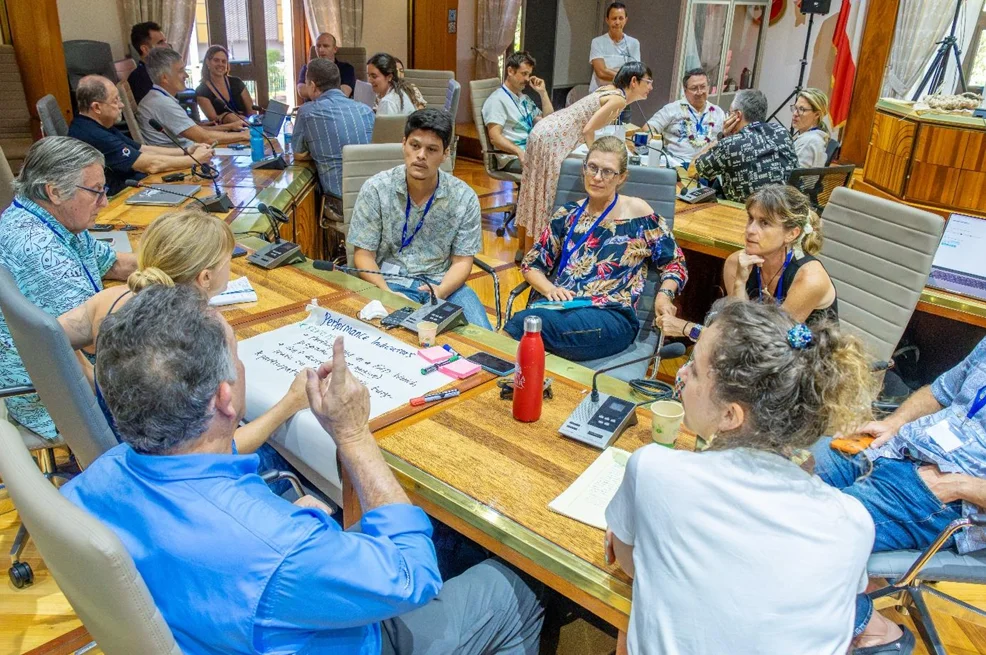
From 9 to 12 February 2026, Tahiti hosted an international workshop on drifting fish aggregating devices (dFADs) lost or abandoned in the Pacific. Anthony Quillec, president of TAHITI FADWATCH, was among the participants: here is what we take away from it.
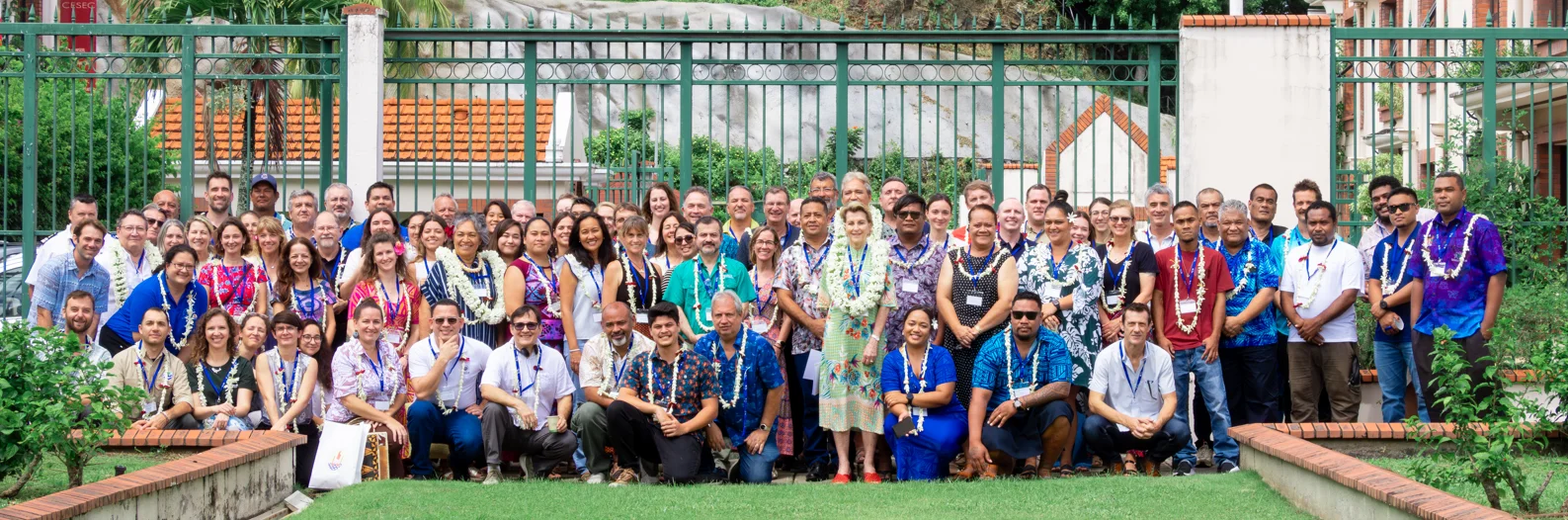
For four days, scientists, government agencies, fishing industry representatives and the people behind recovery programmes met at the Economic, Social, Environmental and Cultural Council (CESEC) in Papeete for this workshop organised by the Pacific Community (SPC). One question united them: how to reduce dFAD loss and abandonment in the Pacific, from the point of view of the fishing industry as well as that of communities. The workshop drew 109 participants from 25 countries and territories.
Our president took part on behalf of the association, to listen and to understand.
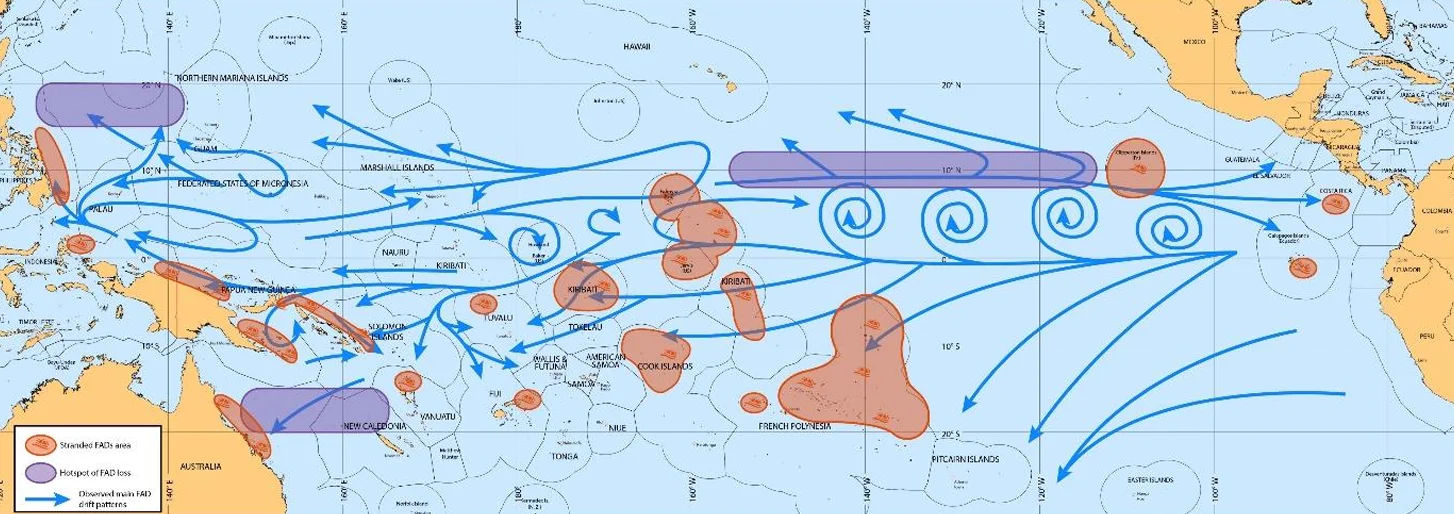
The first day laid the groundwork: definitions, dFAD design, device register, legal framework and beacon tracking. Work was presented on dFAD trajectories and on the areas where they are lost. A drift leaves a trace, and beacons make it possible to study it.
The second day dealt with what affects us most directly: strandings. Regional data collection, environmental impacts, coral reef monitoring. Case studies were presented for French Polynesia and Clipperton, but also for Australia, the Atlantic and the Indian Ocean, the Caribbean and the United States, and the Galápagos. French Polynesia's Environment Directorate (DIREN) spoke on marine litter. The finding is shared well beyond our archipelagos.
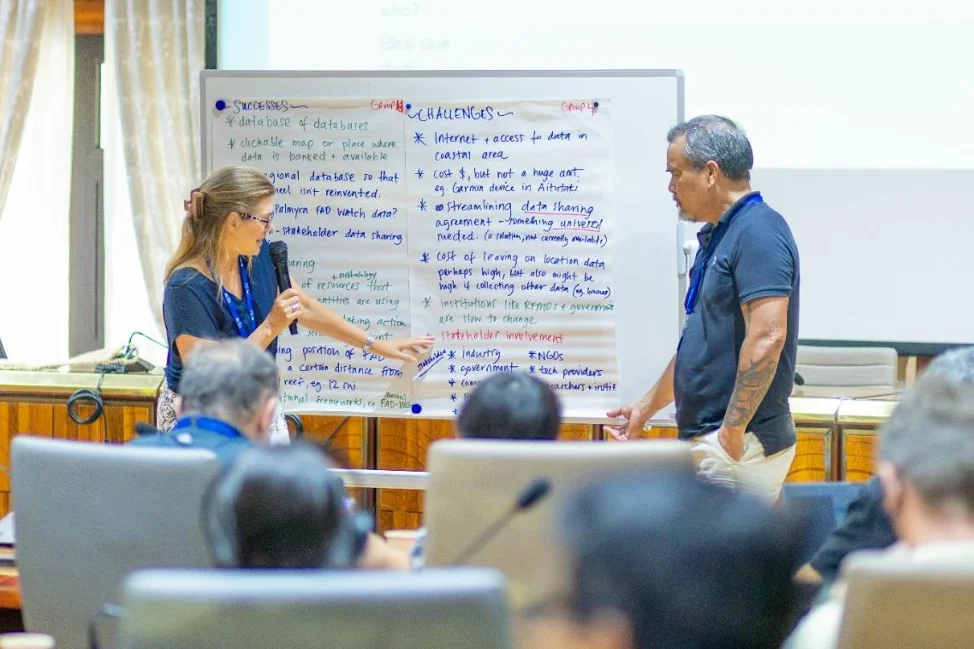
The third day was devoted to solutions. Recovery programmes are already operating in the region, and two of them have a name close to ours: The Nature Conservancy's FAD-watch programme at Palmyra, and the one on Aitutaki, in the Cook Islands. Other approaches were presented: a recovery bounty project in Hawaii, SPC's pilot programmes, a deposit-refund scheme, the repurposing of beacons in the Federated States of Micronesia, an economic analysis of recovery options and funding mechanisms.
The final day took participants to the port of Papeete and to the Museum of Tahiti and the Islands.
We take away three things.
The response is regional. A dFAD does not stop at the boundary of an exclusive economic zone, and a stranding record takes on its full value when it can be compared from one territory to another. That is the point of the regional stranding database maintained by SPC. In French Polynesia, the Marine Resources Directorate (Direction des ressources marines, DRM) has been monitoring these strandings since 2019.
The methods exist. We do not have to reinvent them. Our usefulness lies elsewhere: contributing, on the ground in French Polynesia, to efforts already under way.
Acting before stranding is possible. Several Pacific territories already recover dFADs, at sea or on their shores. A regional drive for collection at sea is taking shape, and our ambition is to become its operational relay in French Polynesia, building on existing schemes and local players.
The next step is immediate. From 15 to 22 February, we are taking part in a mission to survey stranded dFADs in the Tuamotu archipelago, organised by the DRM.
To find out more, the workshop report is available on the website of the Western and Central Pacific Fisheries Commission (WCPFC): https://meetings.wcpfc.int/node/32273
Illustrations
1 / 3
Read next
Understanding
What is a drifting FAD?